


The wind and light FOR blueberry trees
Jul 30, 2025
Leave a message
The "wind and light" that blueberry trees need here refers to the light and ventilation conditions throughout the berry's growing season. These seemingly invisible elements, light and wind, are actually key factors in regulating blueberry growth and development, and determining the yield and quality of blueberry trees.
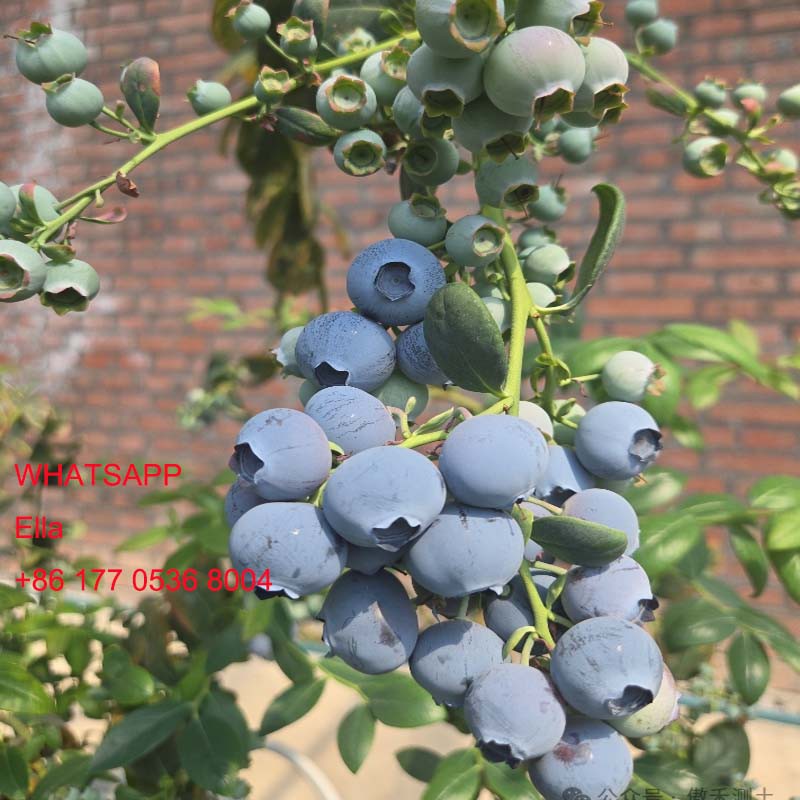
Light is the core driving force of blueberry photosynthesis
1) Light energy is the cornerstone of blueberry's nutrient synthesis. The chloroplasts in blueberry leaves act as sophisticated "light energy factories," with over 300,000 chloroplasts per square millimeter of leaf area. Under sunlight, chlorophyll a and chlorophyll b work together to convert light energy and drive the synthesis of carbohydrate nutrients.
When light intensity within a blueberry canopy reaches over 30% of natural sunlight, the net photosynthetic rate of leaves can reach 15μmol/m²·s. However, when it falls below 20%, the net photosynthetic rate drops below 8μmol/m²·s. This means that leaves within the closed canopy become almost parasitic, not only failing to produce nutrients but also depleting the tree's reserves.
(II) Light is the foundation for the directional regulation of blueberry flower bud differentiation. Blueberry flower bud differentiation is photoperiod-sensitive, especially during the flower bud induction period (July-August) of mature trees, which require 8-12 hours of effective sunlight daily. Adequate light promotes the synthesis of flowering hormones such as abscisic acid in the leaves, while inhibiting the excessive synthesis of hormones such as gibberellins that are detrimental to flower bud differentiation, thereby guiding the rapid transition from vegetative to reproductive growth in blueberries.
The experimental results show that in blueberry orchards with excellent light transmission conditions, the proportion of flower buds on short fruit branches is as high as about 75%, while in blueberry orchards with dense tree crowns and bores, the proportion is only about 40%. In addition, the diameter of blueberry flower buds in good light is on average more than 0.3 mm larger than that of dense blueberry flower buds, and the fullness is more than 20% higher.
(3) Light intensity is the key to sweetening and weight growth in blueberries. From fruit set to veraison, blueberries experience a step-by-step change in their light requirements. Young fruits require a light intensity of 200-300 μmol/m²・s to promote cell division, while the expanding fruit stage requires 300-400 μmol/m²・s to accelerate sugar accumulation. Veraison requires 400-500 μmol/m²・s to induce anthocyanin synthesis. Insufficient light during any of these developmental stages can lead to problems such as delayed fruit growth and green-headed fruit.
2. Ventilation is the invisible guardian of blueberry tree health
(1) Air circulation can prevent and control blueberry diseases. Air velocity in blueberry orchards is significantly negatively correlated with disease incidence. When wind speeds in the blueberry canopy reach 0.5-1.0 m/s, leaf humidity can decrease by 15%-20%, and the attachment rate of pathogen spores can drop by 40%. Especially during the rainy season, good ventilation can accelerate the evaporation of water film on the leaves, shortening the time it takes for pathogens to infect. For example, in a closed environment, the time it takes for the pathogen to germinate and invade the blueberry leaves is only 6 hours, while in well-ventilated orchards, this time is extended to over 12 hours, buying valuable time for blueberry gray mold prevention and control.
(2) Gas exchange can reduce the physiological fruit drop rate of blueberries. The carbon dioxide concentration in the blueberry crown directly affects the photosynthetic efficiency of the leaves. The natural physiological fruit drop rate in a well-ventilated blueberry orchard is about 28% lower than that in a closed and unventilated blueberry orchard.
Experimental research has shown that CO₂ concentrations in the central part of a blueberry canopy under natural conditions are often lower than the atmospheric average of 420 ppm. This concentration drops particularly after 10:00 AM, when it can drop below 350 ppm. Good, consistent ventilation can promote the continuous replenishment of CO₂ in a blueberry orchard, increasing the berry's photosynthetic rate by over 10%-15%. Furthermore, the flow of fresh air promptly removes gases like ethylene produced by leaf respiration, effectively preventing fruit drop caused by excessive ethylene accumulation.
(3) Ventilation can fine-tune the temperature environment for blueberry growth. When blueberries encounter high temperatures, excellent ventilation and air flow can reduce the temperature inside the blueberry crown by 2-3°C, which can effectively avoid the adverse effects of high temperatures on pollen tube elongation on pollination and fruit setting.
For example, when blueberries encounter extreme temperatures exceeding 32°C during their flowering season, a properly pruned orchard with good ventilation achieves a fruit set rate of around 65%, while an unpruned, closed orchard with poor ventilation only achieves a fruit set rate of around 40%. Another example is during the blueberry season in winter, where ventilation helps reduce the temperature swing between day and night, minimizing the risk of frostbite cracking. When the temperature swing exceeds 15°C in winter, the incidence of frost damage to the bark of blueberry trees increases threefold. In a well-ventilated orchard, the temperature swing can be kept within 10°C, significantly helping to protect the blueberries through the winter.
3. Wind and solar synergy is the guarantee for improving blueberry yield and quality. Blueberries will enter the peak fruit-bearing period four years after planting. At this time, if the tree crown is dense and the tree bore is not ventilated and does not see light: First, it will lead to poor differentiation of blueberry flower buds: When the ventilation and light conditions of blueberries are poor, the ratio of auxin and cytokinin in the branches is unbalanced, affecting flower bud induction and reducing the flowering rate by more than 30-40%.
Second, it can lead to a decline in blueberry fruit quality: Poor ventilation and lighting can lead to insufficient sugar accumulation in the fruit, resulting in a 1-2% reduction in sweetness, and poor color change, with a significant decrease in color. Third, it can significantly increase blueberry pests and diseases: Excessive large branches can easily lead to dampness within the canopy, creating a breeding ground for fungal diseases such as gray mold and anthracnose. Fourth, it can lead to a decrease in blueberry yield: When blueberry branches are densely packed and the weather is poor, excessive ineffective branch growth can lead to wasted tree nutrients. This prevents nutrients produced by the leaves from being transported to the fruit, resulting in a 15-20% decrease in single berry weight.
